National Centre of Excellence in Green Ports and Shipping
A collaborative platform between Ministry of Ports, Shipping and Waterways (MoPSW) and The Energy and Resources Institute (TERI)
National Centre of Excellence in Green Ports and Shipping
A collaborative platform between Ministry of Ports, Shipping and Waterways (MoPSW) and The Energy and Resources Institute (TERI)
National Centre of Excellence in Green Ports and Shipping
A collaborative platform between Ministry of Ports, Shipping and Waterways (MoPSW) and The Energy and Resources Institute (TERI)
Research Papers
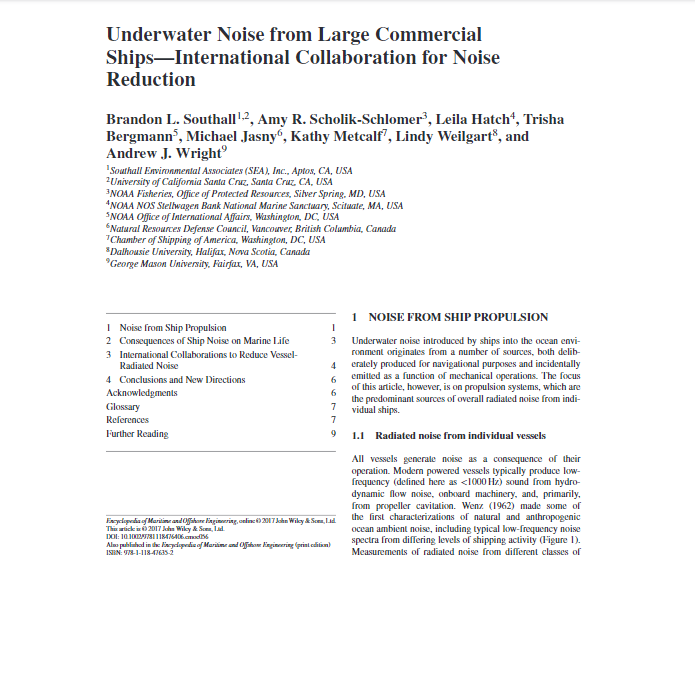
Life-cycle energy and environmental emissions of cargo ships
Author(s):
Zhang Y, Chang Y, Wang C, Fung JCH, Lau AKH
Abstract:
There is growing pressure on maritime shipping to reduce its environmental impact. For this purpose, life-cycle footprint accounting offered a basis for implementing focused actions in the shipping industry's transition to sustainability. In order to calculate the "cradle-to-propeller" footprint of ships, including primary energy consumption, carbon dioxide emissions, and sulfur dioxide emissions, this study used the process-based hybrid life-cycle inventory (LCI) modeling approach. The embodied energy and emissions related to material and fuel use in ship manufacturing were determined using the input-output LCI model. To calculate the operating footprint of various types of ships, authors employed a bottom-up emission model and information on marine traffic throughout the world. Based on 382 cargo ships (including bulk carriers, container ships, and general cargo ships) built in mainland China between 2011 and 2015, authors calculated that in the pre-2019 regulatory scenario, the embodied footprint made up about 10% of the cradle-to-propeller footprint. The large bulk carrier (>100,000 DWT) established the lowest value for life-cycle energy intensity (MJ/nm/1000 deadweight tons [DWT]), followed by the small (0-100,000 DWT) bulk carrier (96), the large container ship (133), the small container ship (196), and the small general cargo (238). Between the three ship types, the bulk carrier was shown to be the most energy-efficient, while ships with higher capacities (measured in DWT) had higher energy efficiencies than ships with lower capacities. The analysis offers a thorough understanding of the life-cycle footprints of cargo ships, enabling more informed policy decisions to move the global marine transport sector toward a future powered by renewable energy sources.