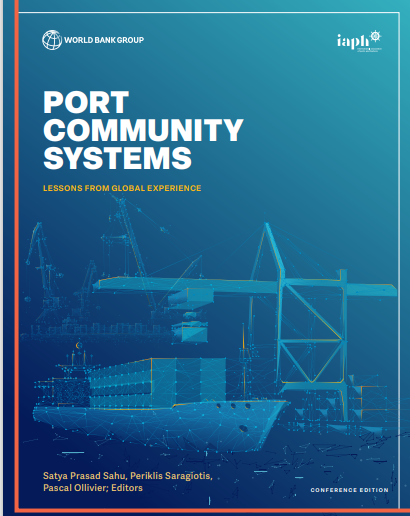
The "Port Community Systems: Driving Trade in the 21st Century" provides a comprehensive analysis of Port Community Systems (PCS) and their impact on global trade. PCS are digital collaborative platforms that enable seamless exchange of information among a port’s many stakeholders, including customs agencies, port management, shipping and logistics companies, and freight forwarders. These platforms reduce paperwork and administrative red tape often associated with port logistics, leading to quicker decisions and streamlined operations. The report highlights that more than 80 percent of goods traded globally are shipped by sea. From 1990 to 2019, low- and middle-income countries doubled their share in global exports to 30 percent, helping to cut the proportion of their population living in extreme poverty from 47 percent to 10 percent. The report also emphasizes that ports with the highest scores on the World Bank’s Logistics Performance Index have all adopted PCS, while most of the laggards have not. Among the world’s ports that use the platform, just 16 percent are in low and middle-income countries, while 84 percent are in high-income countries. The report includes detailed case studies showing how PCS have improved port operations around the world. For instance, at the Port of Djibouti, a freight forwarder now spends 1-2 minutes to complete online booking, avoiding hours of queuing, paper-based manual checks, and stamps. The Djibouti PCS has cut turnaround time at the terminal operators to just 1 hour from 24 hours. In the Netherlands, the PCS known as PORTBASE has reduced annual costs for businesses involved in logistics by €245 million. The report serves as a step-by-step guide to implementing a PCS and explains its advantages for developing countries. It provides valuable insights for policymakers, port authorities, and logistics providers on how to enhance PCS adoption and leverage its benefits.