

A collaborative platform between Ministry of Ports, Shipping and Waterways (MoPSW) and The Energy and Resources Institute (TERI)
A collaborative platform between Ministry of Ports, Shipping and Waterways (MoPSW) and The Energy and Resources Institute (TERI)
A collaborative platform between Ministry of Ports, Shipping and Waterways (MoPSW) and The Energy and Resources Institute (TERI)
Greening of the operations of the ports and the vessels by 2030/2047, one of the main goals of the Ministry of Ports, Shipping and Waterways, has been included in the Harit Sagar Guidelines. This also includes the target of harnessing 60% energy from renewables by 2030. According to the environmental regulations of the International Maritime Organization (IMO), ships are to be constructed with an immediate reduction in greenhouse gas (GHG) emissions of 15%, then 20% by 2020, and 30% by 2025. Adopting renewable energy (RE) in ports would also contribute towards achieving the non-fossil fuel energy capacity of 500 GW by 2030 with 50% contribution from RE. This is in accordance with our honourable Prime Minister’s announcement at the COP26.
Port activities are broadly bifurcated into operations of port and the movement and anchoring of ships. The power requirements of the two types of activities are met by the bunker oil a hydrocarbon emitting carbon dioxide.
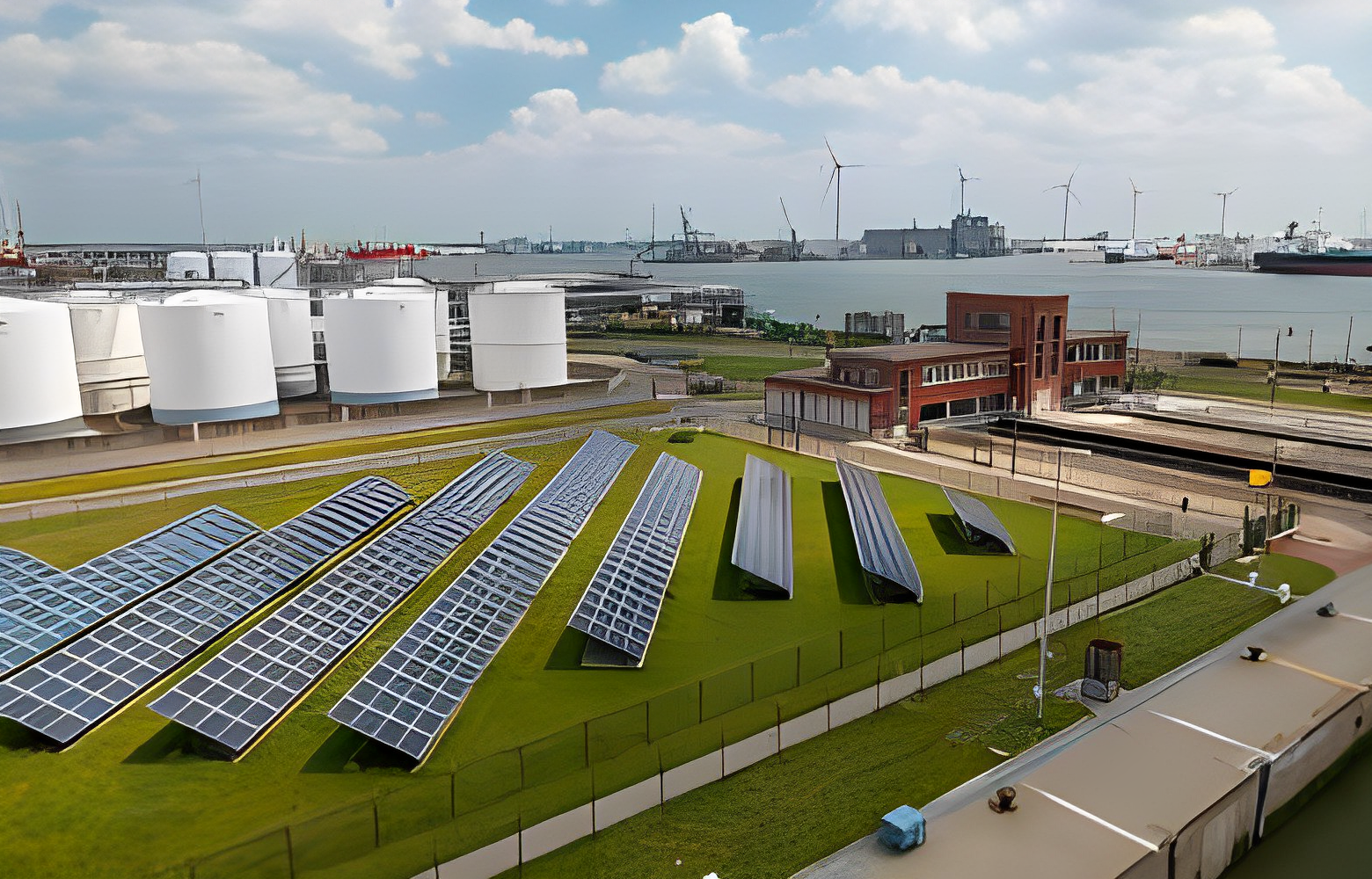
The government is also looking into ways of mitigating the carbon dioxide emissions through concrete actionable projects. Initiatives to convert the port operations, infrastructure, tugs, vessels to use green energy have been launched. Generation and use of green energy in all the ports, harnessed through the renewable energy sources such as wind power, solar power, waste-to-energy is one of the prime focus areas. RE road map to achieve 60% by 2030, one of the projects of National Centre of Excellence in Green Ports and Shipping (NCoEGPS), would work towards realization of the following three principal objectives of RE generation: